
By the end of the course, the learner should be able to:
- Define peptic ulcer disease and identify its main causes and risk factors.
- Assess a patient, recognise alarm signs, and select appropriate H. pylori tests.
- Explain PUD medicines and appropriate H. pylori eradication treatment.
- Counsel patients on taking treatment correctly and managing adverse effects.
- Recognise complications that require emergency referral.
- Advise on preventing recurrence and arrange follow-up, including confirmation of H. pylori eradication when indicated.
Introduction
Peptic ulcer disease (PUD) is an open sore in the lining of the stomach or duodenum that extends through the muscularis mucosae into deeper tissue. The two main types of PUD are gastric ulcers and duodenal ulcers.
Pathophysiology: Peptic ulcers develop when aggressive factors overwhelm the mechanisms that protect and repair the gastroduodenal mucosa.
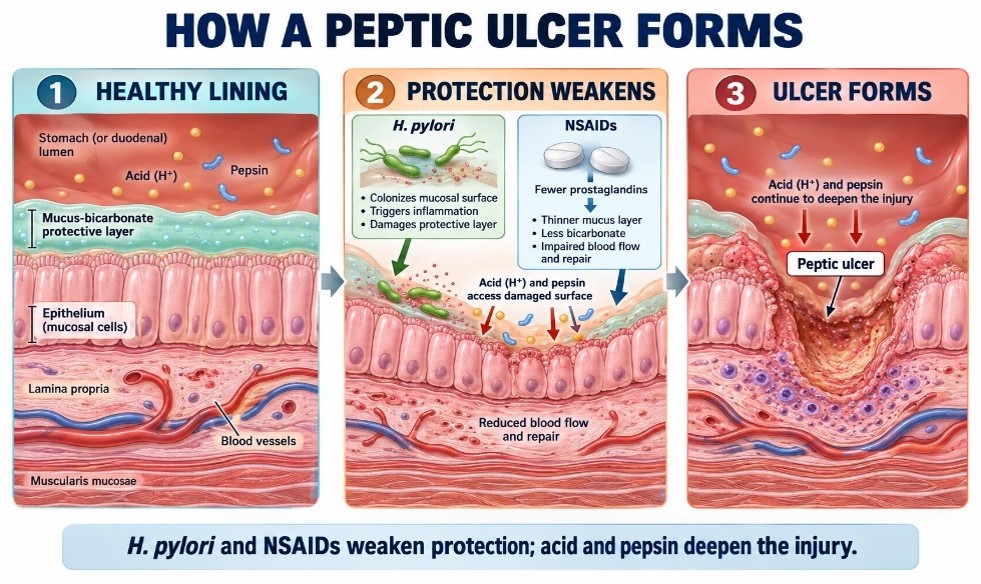
| Aggressive factors | Protective factors |
|---|---|
| Gastric acid and pepsin | Mucus and bicarbonate secretion |
| H. pylori infection | Adequate mucosal blood flow |
| NSAIDs | Prostaglandins |
| Smoking and bile reflux | Rapid epithelial repair |
Causes
I. Helicobacter pylori infection: H. pylori is a Gram-negative bacterium that colonises the stomach. It produces urease, which helps it survive in an acidic environment, and causes inflammation that weakens mucosal protection. The damaged mucosa becomes vulnerable to acid and pepsin, leading to ulceration.
II. Use of NSAIDs: Non-selective NSAIDs such as diclofenac, piroxicam and ibuprofen can cause ulcers and GIT bleeding. NSAIDs inhibit cyclo-oxygenase-1 (COX-1), reducing the production of protective prostaglandins that maintain gastric mucosal blood flow and stimulate mucus and bicarbonate secretion. Risk is higher in patients who are older than 65 years, have a previous ulcer or gastrointestinal bleed, or use high-dose NSAIDs.
III. Cigarette smoking: Smoking weakens the gastric lining, delays ulcer healing and increases the risk of complications and recurrence. Patients should be supported to stop smoking.
IV. Excessive alcohol consumption: Excessive drinking of alcohol directly irritates and inflames the gastric lining. Although alcohol is not a major direct cause of peptic ulcers, it may worsen ulcer symptoms and delay healing.
V. Emotional stress: Emotional stress does not directly cause most peptic ulcers, but it may worsen symptoms and increase risk.
Clinical presentation
- Epigastric pain.
- Abdominal discomfort or fullness.
- Bloating and belching.
- Nausea or vomiting.
- Reduced appetite.
Some patients - particularly older adults and those using NSAIDs - may have few symptoms until a complication such as bleeding or perforation occurs.
Differences between gastric and duodenal ulcer
| Clinical feature | Gastric ulcer | Duodenal ulcer |
|---|---|---|
| Site | Stomach, commonly the antrum or lesser curvature | First part of the duodenum, usually the duodenal bulb |
| Typical patient | More common in older adults | Often occurs in younger adults, but may occur at any age |
| Cause | Impaired gastric mucosal defence | Increased acid exposure combined with weakened duodenal mucosal protection |
| Acid production | Usually normal or reduced | Usually normal or increased |
| Pain pattern | Epigastric pain may occur or worsen soon after eating | Pain often occurs when the stomach is empty or 2-3 hours after eating; nocturnal pain is common |
| Effect of food | Food may worsen pain, causing reduced food intake or weight loss | Food or antacids may temporarily relieve pain |
| Weight | Weight loss may occur because eating causes pain | Weight may be maintained or increased |
| Malignancy | Some gastric cancers may appear as ulcers; biopsy is usually required | Malignancy is rare |
Community Pharmacy Assessment
Ask: Where is the pain, when did it start, and how severe is it? Is there vomiting of blood, coffee-ground vomit, black tarry stool or fresh blood? Is there persistent vomiting, difficulty swallowing, weight loss, dizziness or fainting? Is the patient taking NSAIDs, aspirin, steroids, anticoagulants or antiplatelets? Is there a history of peptic ulcer, GI bleeding or recent H. pylori treatment? Pain related to meals does not reliably distinguish gastric from duodenal ulcers.
Check: Where possible, assess pulse, blood pressure, pallor, hydration, abdominal distension and guarding. Avoid deep abdominal palpation unless trained.
| Red-flag finding | Possible concern | Pharmacy action |
|---|---|---|
| Vomiting blood or coffee-ground material | Upper gastrointestinal bleeding | Refer immediately to an emergency department. Keep the patient nil by mouth and do not give NSAIDs. |
| Black, tarry stool (melaena) | Usually upper gastrointestinal bleeding | Refer immediately, particularly if accompanied by weakness, dizziness, pallor, fainting or a rapid pulse. |
| Fresh or dark-red blood in the stool | Gastrointestinal bleeding | Refer urgently. Arrange immediate transfer if bleeding is heavy, persistent or associated with faintness. |
| Sudden or severe abdominal pain | Perforated ulcer, pancreatitis, obstruction or another acute abdominal emergency | Refer immediately. Keep the patient nil by mouth and avoid NSAIDs, laxatives and unnecessary oral medicines. |
| Rigid abdomen, guarding or severe pain when the abdomen is touched | Peritonitis or perforation | Medical emergency: arrange immediate transfer to hospital. |
Refer urgently for progressive dysphagia, painful swallowing, weight loss, suspected anaemia or persistent symptoms.
Diagnosis of Peptic Ulcer Disease
Symptoms alone cannot confirm PUD or reliably distinguish a gastric ulcer from a duodenal ulcer. Diagnosis involves testing for H. pylori and, when indicated, upper gastrointestinal endoscopy.
H. pylori stool antigen test: Preferred non-invasive test for active infection and confirmation of eradication. Stop PPIs or P-CABs for 2 weeks, when clinically safe. Avoid antibiotics and bismuth for at least 4 weeks. Confirm eradication at least 4 weeks after completing treatment.
Upper gastrointestinal endoscopy: Endoscopy is the best test for confirming PUD but may not be readily available in every Ugandan health facility. Refer for endoscopy when the patient has: gastrointestinal bleeding or other complications; unexplained weight loss or anaemia; progressive difficulty swallowing; persistent vomiting; severe, recurrent or treatment-resistant symptoms; or suspected perforation, obstruction or malignancy. Endoscopy identifies the ulcer, permits control of bleeding and allows biopsy. Gastric ulcers should usually be biopsied to exclude cancer.
Differential diagnosis
- Gastritis: Epigastric burning, nausea or discomfort, often associated with NSAIDs, alcohol or H. pylori.
- Gastro-oesophageal reflux disease (GORD): Burning behind the chest, acid regurgitation, symptoms that worsen after meals, bending or lying down.
- Functional dyspepsia: Recurrent epigastric discomfort, early fullness or bloating without an ulcer or other structural disease.
- Gastric cancer: Persistent symptoms with unexplained weight loss, early satiety, progressive vomiting, anaemia or an abdominal mass. Refer urgently.
- Pancreatitis: Severe, persistent upper abdominal pain often spreading to the back, with nausea or vomiting.
- Gallbladder disease: Right upper abdominal pain, often after fatty meals, which may spread to the right shoulder or back.
- Irritable bowel syndrome: Recurrent abdominal pain associated with passing stool or a change in stool frequency or consistency.
Management of Peptic Ulcer Disease
Aim of treatment: Relieve symptoms and heal the ulcer; eradicate H. pylori when present; stop or reduce ulcer-causing medicines; prevent recurrence and complications; and detect gastric malignancy early.
Patient education and counselling:
- Take all prescribed medicines exactly as directed and complete the full H. pylori eradication regimen, even when symptoms improve.
- Return for a test confirming H. pylori eradication - usually at least 4 weeks after completing antibiotics or bismuth and after stopping PPIs for approximately 2 weeks, when clinically safe.
- Do not self-medicate with NSAID painkillers such as ibuprofen, diclofenac, piroxicam, aspirin or indomethacin because they can cause or worsen ulcers and bleeding.
- Stop smoking and avoid or limit alcohol, particularly during active symptoms or treatment.
- Eat a balanced diet and reduce only foods or drinks that consistently worsen symptoms. Eat regular or smaller meals to improve comfort.
- Avoid unregulated herbal or traditional ulcer remedies.
- If heartburn or acid reflux is also present, avoid lying down for 2-3 hours after eating.
- Seek urgent medical care for vomiting blood, black tarry stool, fainting, severe weakness, persistent vomiting or sudden severe abdominal pain.
Drugs used in treatment of peptic ulcer
1. Antacids: Neutralise existing gastric acid and provide rapid, short-term relief of epigastric pain and heartburn. They do not eradicate H. pylori and should not be relied upon to heal complicated ulcers.
- Magnesium hydroxide: Neutralises gastric acid; may cause diarrhoea.
- Aluminium hydroxide: Neutralises gastric acid and may balance the diarrhoeal effect of magnesium; may cause constipation.
- Sodium bicarbonate: Rapid, short-acting neutralisation; may cause belching, sodium and fluid retention and metabolic alkalosis with excessive use.
- Calcium carbonate: Rapidly neutralises gastric acid; may cause constipation, belching and hypercalcaemia with excessive or prolonged use.
- Sodium alginate: Forms a floating protective barrier over stomach contents and reduces acid reflux; may cause bloating or nausea.
- Simethicone: Breaks up gas bubbles and relieves bloating and flatulence. It does not reduce gastric acid or heal ulcers.
- Oxethazaine: Local anaesthetic that temporarily relieves pain caused by acid irritation. It may mask persistent or worsening symptoms and should be used only for a short period.
Antacid counselling points: Shake antacid suspensions well before measuring off each dose. Chew tablets only if labelled chewable. Take ciprofloxacin at least 2 hours before or 6 hours after an antacid containing magnesium, aluminium or calcium. Check with the pharmacist about timing if using tetracyclines, iron or levothyroxine. Seek medical advice if symptoms persist or worsen.
2. Misoprostol: A synthetic prostaglandin E1 analogue. It protects the stomach lining by increasing mucus and bicarbonate secretion, supporting mucosal blood flow and reducing gastric acid secretion.
- Indication: Prevention of NSAID-induced gastric ulcers in high-risk adults who need to continue NSAID treatment.
- Usual adult dose: 200 micrograms four times daily, taken after meals and at bedtime.
- Duration: For as long as NSAID treatment is required.
- Side effects: Diarrhoea, abdominal cramps, nausea, flatulence and headache.
- Contraindication: Must not be used in pregnancy because it stimulates uterine contractions.
- Misoprostol does not provide rapid relief from ulcer pain. Keep taking it for as long as prescribed while you take the NSAID. Avoid antacids containing magnesium. Seek urgent care if you vomit blood, pass black tarry stools, faint or develop sudden severe abdominal pain.
3. Sucralfate: A mucosal-protective medicine that, in the acidic stomach environment, binds mainly to the ulcer surface and forms a protective barrier against gastric acid, pepsin and bile salts.
- Indication: Short-term treatment of an active duodenal ulcer.
- Adult dose: 1 g four times daily (every 6 hours) on an empty stomach - 1 hour before breakfast, lunch and the evening meal, and again at bedtime.
- Duration: Usually 4-8 weeks.
- Side effects: Constipation, nausea, dry mouth or abdominal discomfort.
- Renal precaution: Use cautiously in severe kidney impairment because the aluminium content may accumulate.
- Interactions: Binds some oral medicines such as fluoroquinolones, tetracyclines, levothyroxine, digoxin and phenytoin and reduces their absorption. Do not take antacids within 30 minutes before or after sucralfate.
4. Bismuth Subsalicylate: A mucosal-protective and antidiarrhoeal medicine. It coats irritated GI mucosa, reduces intestinal fluid secretion and inflammation, and has activity against some organisms and toxins. It also has activity against H. pylori but must be combined with other medicines for eradication.
- Dosage forms: 262 mg chewable tablets and 262 mg/15 mL oral suspension.
- Indications: Short-term relief of acute uncomplicated diarrhoea, nausea, indigestion, heartburn and upset stomach; part of bismuth-based quadruple therapy for H. pylori eradication.
- Adult dose (acute diarrhoea/dyspepsia): Tablets 524 mg or 30 mL of the suspension every 30-60 minutes as needed; do not exceed 8 doses in 24 hours.
- H. pylori: 524 mg 4 times daily for 14 days with a PPI, tetracycline and metronidazole.
- Side effects: Temporary blackening of the tongue or stool, constipation, nausea and abdominal discomfort.
- Precaution: Contains salicylate. Excessive doses or prolonged use may cause salicylate toxicity or bleeding.
- Contraindications: Aspirin/salicylate allergy; active GI bleeding, bleeding disorder or unexplained black or bloody stool; anticoagulants or antiplatelets (unless assessed); severe kidney impairment; and pregnancy from 20 weeks onward.
5. Proton Pump Inhibitors (PPIs): Drugs that strongly reduce gastric acid production. Examples include omeprazole, esomeprazole, lansoprazole, pantoprazole and rabeprazole.
Mode of action: PPIs irreversibly block the hydrogen-potassium ATPase (proton pump) in gastric parietal cells, blocking the final stage of acid production.
Indications: GORD and erosive oesophagitis; peptic ulcer disease; H. pylori eradication; prevention and treatment of NSAID-associated ulcers; Zollinger-Ellison syndrome; upper gastrointestinal bleeding.
Dosage example (omeprazole): GERD - 20 mg once daily for 4-8 weeks; Duodenal ulcer - 20 mg once daily for 4 weeks; Gastric ulcer - 20 mg once daily for 4-8 weeks; H. pylori regimen - 20 mg twice daily for 14 days; NSAID-ulcer prevention - 20 mg once daily.
Side effects: Headache, abdominal discomfort, nausea or vomiting, diarrhoea or constipation, flatulence.
Interactions: Omeprazole and esomeprazole may reduce clopidogrel activation; PPIs may reduce absorption of atazanavir and other pH-dependent medicines (e.g. itraconazole); may delay methotrexate elimination; may increase warfarin effect (monitor INR); increased digoxin toxicity risk when magnesium is low.
Counselling: Take the PPI 30-60 minutes before meals. Swallow delayed-release tablets or capsules without crushing or chewing. Full clinical response takes several days of continuous use. Before an H. pylori breath or stool test, ask about stopping the PPI for 2 weeks. Test of cure is at least 4 weeks after finishing treatment.
6. Potassium-Competitive Acid Blockers (P-CABs): Vonoprazan is the only P-CAB available in Uganda. Compared with PPIs, P-CABs act faster, provide stronger and more consistent 24-hour acid suppression, and can be taken with or without food. They do not require acid activation or enteric coating.
- Mode of action: Reversibly and competitively block potassium binding to the hydrogen-potassium ATPase (proton pump), inhibiting both active and resting proton pumps.
- Dosage: Vonoprazan 10-20 mg once daily depending on indication; 20 mg twice daily for H. pylori therapy for 14 days.
- Position in PUD: PPIs remain the usual first-line medicines. P-CABs may be considered when rapid and sustained acid suppression is required, the ulcer does not respond to correctly used PPI therapy, or the patient cannot tolerate a PPI.
- Side effects: Abdominal discomfort, diarrhoea or constipation, nausea, indigestion, headache.
- Counselling: Take with or without food, swallow the tablet whole with water, complete the full 14-day H. pylori regimen, and report severe or persistent diarrhoea, rash, facial swelling or difficulty breathing immediately.
H. pylori Eradication Therapy (14 days)
| Regimen | Dosage and duration |
|---|---|
| Clarithromycin-based triple therapy | Standard-dose PPI twice daily + amoxicillin 1 g twice daily + clarithromycin 500 mg twice daily for 14 days |
| Clarithromycin triple therapy for penicillin allergy | Standard-dose PPI twice daily + clarithromycin 500 mg twice daily + metronidazole 400 mg three times daily for 14 days |
| Levofloxacin-based triple therapy | Standard-dose PPI twice daily + amoxicillin 1 g twice daily + levofloxacin 500 mg once daily for 14 days |
Acute Complications
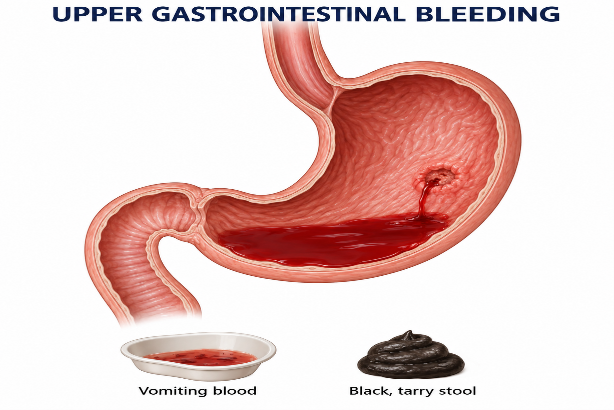
a) Upper gastrointestinal bleeding is the most common major complication of PUD and may occur without preceding ulcer symptoms. Signs: haematemesis or coffee-ground vomit; melaena; dizziness, fainting, severe weakness or pallor; tachycardia, hypotension or shock. Give IV crystalloids while arranging blood and definitive care; transfuse at Hb below about 7 g/dL in most stable adults; urgently refer to a hospital with blood transfusion, endoscopy and surgical services; perform endoscopy after stabilisation, ideally within 24 hours; after successful haemostasis give high-dose IV PPI (e.g. pantoprazole 80 mg IV followed by 8 mg/hour for 72 hours).
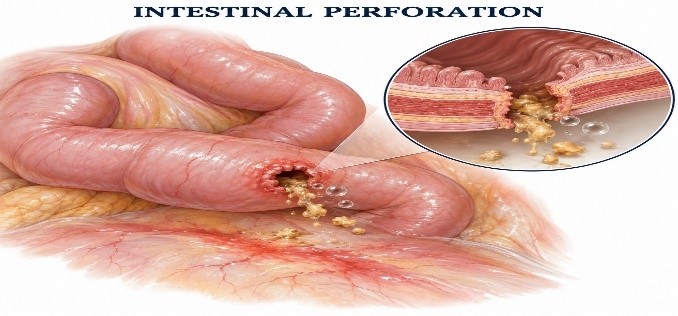
b) Intestinal perforation is a full-thickness hole in the bowel wall, causing peritonitis and potentially sepsis. It is a surgical emergency. Signs: severe, sudden abdominal pain that may become widespread; tenderness, guarding, rebound tenderness or a rigid abdomen; fever, vomiting, reduced bowel sounds, rapid pulse or shock. Refer immediately, keep nil by mouth, give IV fluids, analgesia, oxygen if hypoxaemic and broad-spectrum IV antibiotics; perform urgent laparotomy where available; test for and eradicate H. pylori after stabilisation and discontinue NSAIDs.
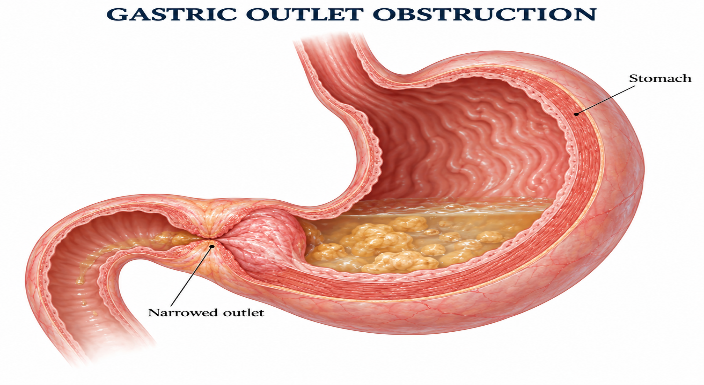
c) Gastric outlet obstruction is a blockage at the lower end of the stomach or first part of the duodenum. It may result from swelling or scarring from PUD or from a tumour. Signs: repeated vomiting after meals without bile, early satiety, nausea, upper abdominal fullness, dehydration and weight loss. Urgently admit or refer; keep nil by mouth, insert a nasogastric tube, give IV fluids and correct electrolyte disturbances; perform endoscopy with biopsy to exclude malignancy.
d) Gastric malignancy: A gastric ulcer may be malignant or conceal gastric cancer. Endoscopic biopsy is therefore essential for most gastric ulcers. Follow-up endoscopy should confirm healing, commonly after 6-8 weeks.
Conclusion
Peptic ulcer disease is common and successful management requires adequate acid suppression, eradication of H. pylori, safer NSAID use, adherence to treatment and appropriate follow-up. PPIs remain the standard acid-suppressing treatment in most Ugandan settings. P-CABs provide faster and more sustained acid suppression, but their role depends on availability and cost. Early recognition of bleeding, perforation and gastric outlet obstruction and urgent referral can prevent avoidable disability and death.
Acknowledgement: This reading material was compiled and made available for the professional development of pharmacy professionals by Mr. Nathan Muyinda, whose support to the PPAU CME-CPD programme and its learners is sincerely acknowledged.
References
- Uganda Ministry of Health. Uganda Clinical Guidelines 2023.
- American College of Gastroenterology. Clinical guideline on the treatment of Helicobacter pylori infection, 2024.
- World Gastroenterology Organisation. Global guidance on H. pylori and peptic ulcer disease.
- American College of Gastroenterology. Clinical guideline on upper gastrointestinal and ulcer bleeding, 2021.
Assessment
Once you've read through the content, take the quiz. Score at least 75% to earn 4 points. We verify your PPAU number before issuing points and your certificate.
Take AssessmentYou can retake the assessment up to 3 times, and may not resubmit once you have passed.